
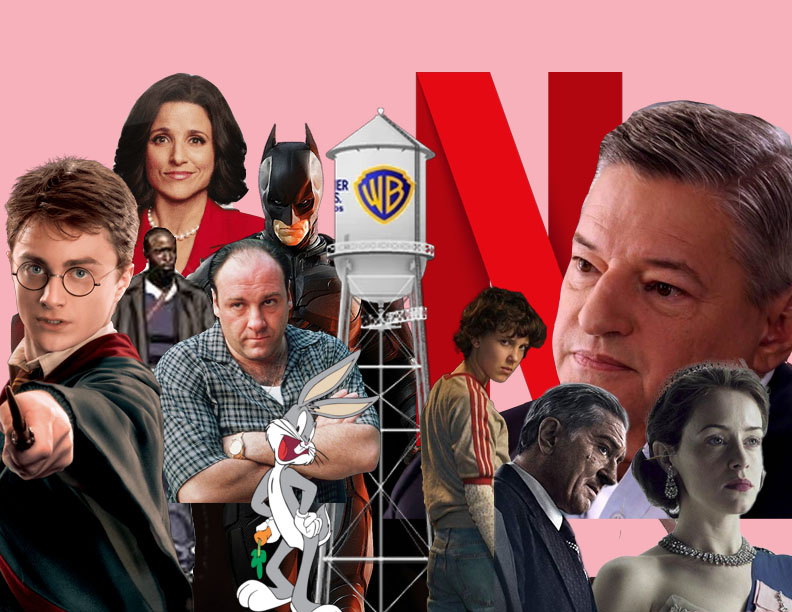
For months, rumors had been circulating through Hollywood that Warner Bros. Discovery, the century-old studio behind some of the most recognizable films and TV shows ever made, was on the market. The speculation ended with a shock: Netflix, the world’s largest streaming platform and a company built on disrupting the traditional entertainment model, emerged as the winning bidder. Practically overnight, a tech-born streaming service was poised to take control of one of the most influential studios in film history, setting off alarm bells across the industry.
Netflix’s planned $83 billion acquisition of Warner Bros. Discovery marks one of the most consequential power shifts Hollywood has ever seen. Warner Bros. isn’t just another brand — it’s the home of Batman, Harry Potter, Superman, Looney Tunes, “Casablanca,” “The Shining,” “The Wizard of Oz” and HBO’s entire arsenal of modern classics. If this deal goes through, all of that history, all of those franchises and the future of some of the most culturally influential television shows would fall under the control of a single streaming platform.
The Netflix-Warner Bros. merger rolls back 100 years of progress for independent filmmakers. In the early 20th century, Hollywood was dominated by a small group of studios — Paramount, MGM, Warner Bros. and Fox — that controlled nearly every part of the entertainment industry (sound stages, actors’ contracts, distribution networks and even the theaters themselves). The film industry became exclusive and corporate, drifting further from what art is meant to be: human expression. It took the landmark 1948 Supreme Court case United States v. Paramount to break up the monopoly, forcing studios to divest their theaters and diversify the industry.
The danger doesn’t stem from the acquisition itself; it comes from what happens when one company grows powerful enough to silence competing voices, shrinking the entire creative landscape to whatever a few executives deem profitable while countless other stories disappear unheard. For decades, Warner Bros. existed as a creative counterbalance, known for funding unique and complex projects. Shows like “Sex and the City” and “The Wire” ignited discussions about gender, sexuality and race that other studios were afraid to touch. Netflix, by contrast, is a data-driven tech company that measures every second audiences watch and specifically engineers its content to keep you on the app. Its strategy resembles TikTok’s more than Hollywood’s: continuous engagement is its dominant priority.
In the process of the merger, theaters might become collateral damage. Publicly, Netflix claims it will continue Warner Bros.’ tradition of releasing major films in cinemas, but it has no real financial incentive to protect theatrical cinema.
“Netflix views any time spent watching a movie in a theater as time not spent on their platform,” a group of anonymous Hollywood producers said.
The anxiety surrounding this deal is defined by the tension between preserving moviegoing and maximizing profits. Unions have already begun to brace for impact. The Directors Guild of America (DGA) became the first major Hollywood union to speak out, protesting that the merger threatens creativity and competition. Additionally, the DGA announced plans to meet with Netflix directly.
Now it’s up to regulators in Washington and Europe to decide the industry’s future. Hollywood has lived through monopolies before, and it took decades, lawsuits and major antitrust rulings to pry storytellers out of the grip of a few massive companies. But the last time this dynamic was broken, the country was in the middle of the Progressive Era. The government didn’t intervene out of fear for the film industry; it acted because the public insisted that cultural imagination could not be controlled by a single corporation. That political climate doesn’t exist today. Today’s Washington has proven itself comfortable with tech behemoths accumulating influence and eroding competition. If this battle is left to modern regulators alone, history suggests the industry may sink even deeper into consolidation long before anyone steps in to reverse it. Whether the deal ends in approval or collapse, the stakes remain enormous. Whoever controls the stories controls the culture, and history shows exactly what happens when that power is concentrated in one place.