
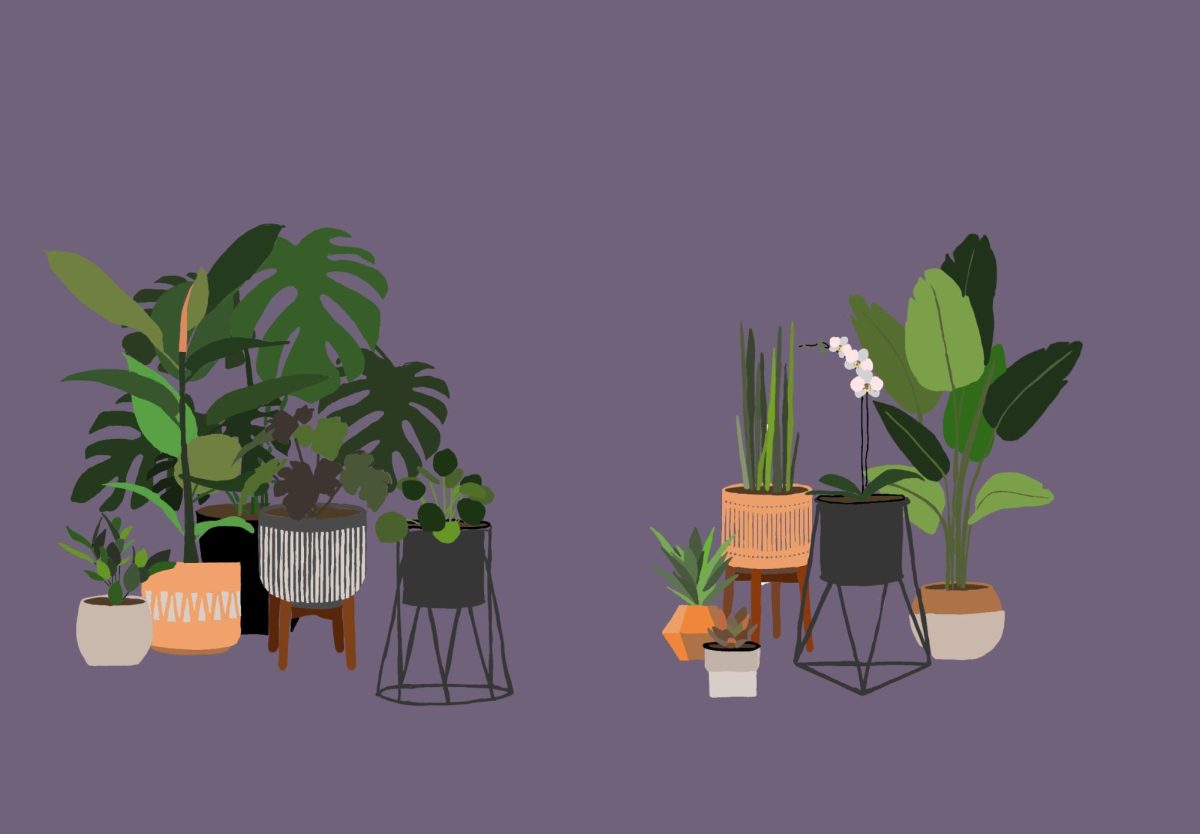
Many buy potted plants and small succulents to improve the aesthetic of their homes without understanding the benefits that come from them. According to a study conducted by the National Aeronautics and Space Administration (NASA), people spend, on average, 80% of their lives indoors. Spending a vast amount of time inside increases the importance of having good air quality in households, which plants can help significantly with.
Homes have multiple causes of air pollution, such as cleaning products, paint, mold and mildew. Houseplants can remove dangerous chemicals in the air such as formaldehyde and benzene, by absorbing the chemicals into their leaves and roots, leading to an improvement in air quality, as shown in a NASA study. Benzene is removed from an environment within 24 hours after a houseplant is introduced.
The microbes in soil are connected to gut functions, crucial for immune health. The microorganism rich soil alleviates inflammation in the brain and in turn prevents damage to the brain and its memory saving capabilities.
“Microorganisms found in soil are proven to have anti-depressive effects,” Lauren Garvey, a facilitator working at Cancer Wellness located at Piedmont, said.
Peace lilies, bamboo, aloe vera, figs, spider plants, Boston ferns and other plants with larger and more leaves are highly recommended to have in a household. The more leaves a plant has, the more fresh oxygen it gives off, leading to them being the most beneficial.
Plants can also decrease risks of depression in people of all ages. A study by Urban Mind was conducted all across the world (United States, Britain and the Netherlands) and it shows that people who live in places where flora is very prominent have lower chances of depression and anxiety. Green environments lead to air pollution reduction, which decreases exposure to pollution. Cleaner air lowers developing depression and anxiety.
Plants are also capable of lowering a person’s violence and anger. A study conducted by the University of Utah on prison inmates proves that they committed less aggressive acts and had less cruel thoughts when exposed to plants. By just viewing videos of nature scenes, the inmates had 26% less violent acts in one year than prisoners who hadn’t been exposed.
This study shows that the plants do not even have to be real to better people, they can simply be a picture, video or even a small succulent. Fake plants are still helpful, as many people are too busy to care for live plants. Taking care of plants can come easily to some, but others might feel they are incapable of taking care of one.
Additionally, plants are able to improve sleep quality and duration of sleep. Houseplants purify an environment’s air and support people’s respiratory systems, both factors that encourage deeper and more restful sleep. The snake plant, peace lilies and pothos are all plants that uniquely produce oxygen from carbon dioxide all day, unlike other plants who stop at some point during the day.
Everyone can find one benefit from plants they enjoy. The lasting result of having plants in a home can benefit a person’s mental health, creating a positive influence in a house.