
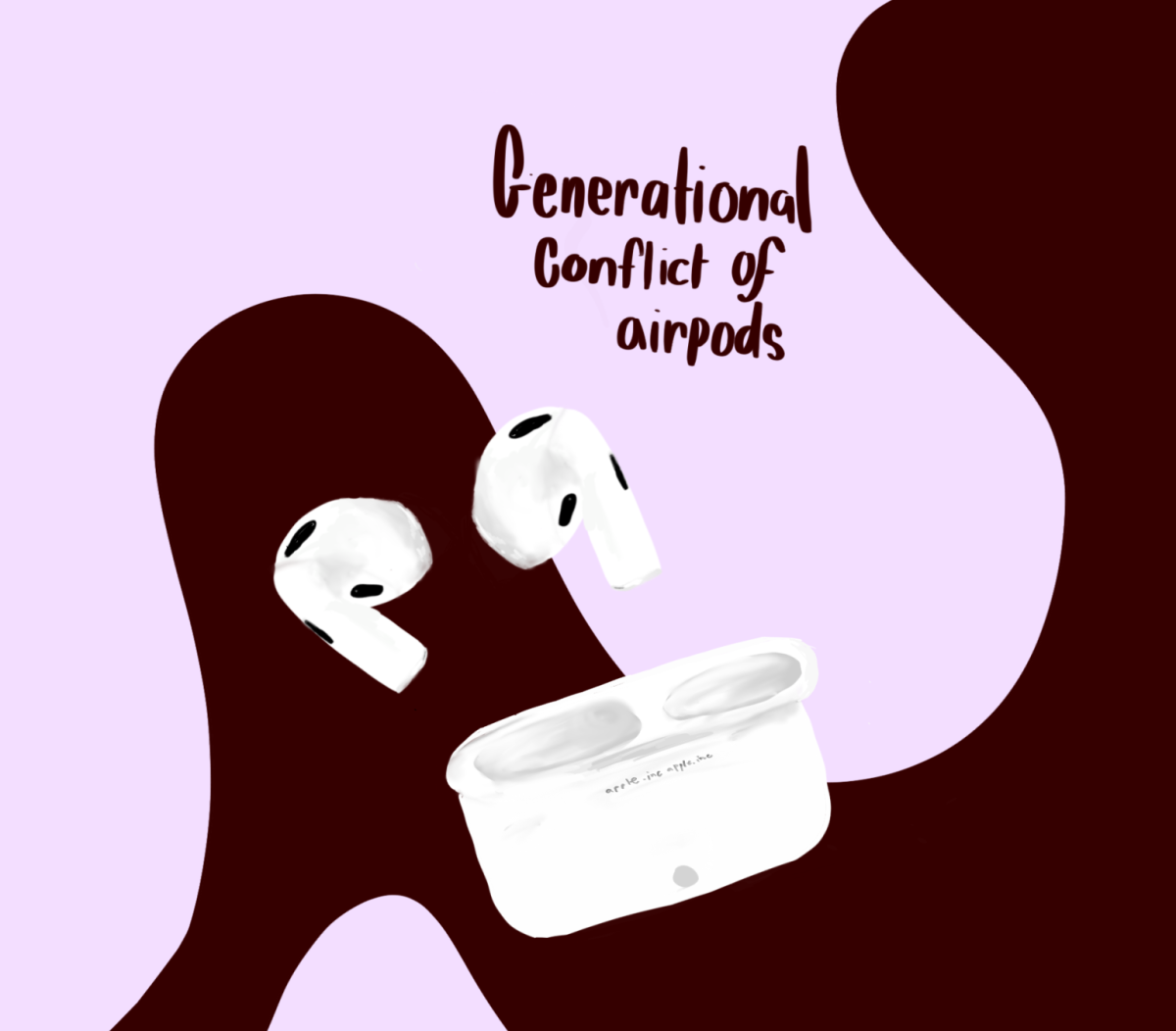
Differing opinions of technology and social etiquette creates generational conflict over headphones in public. Older generations often view wearing headphones as disrespectful, but younger generations use it as a tool for escapism and joy. Adults often perceive someone using headphones as antisocial and unapproachable. Specifically, teachers are prone to assuming that students are purposely ignoring them or using music as a distraction from lessons. Teachers may feel that headphones hinder teacher-student interaction and may lead to a negative impact on social skills.
Regardless of whether they are wired, wireless or over the head, headphones are integrated into many people’s everyday lives. As earphones have become increasingly popular, social etiquette has begun to slip, but in most cases, it is unintentional. Although teenagers are not trying to appear impolite, the use of headphones during class or in a conversation is disrespectful and many teenagers tend to forget that. The invention of Apple AirPods gave Gen Z an easy way to listen to music discreetly, and the simplicity of AirPods allowed access to music at all times.
“I use my AirPods during class because music helps me focus; however, I will always use them discreetly because I know it can be seen as rude to use AirPods in class,” sophomore Ruby Banks said.
Some students will acknowledge a teacher’s perspective, but try to override it by only using one headphone. It is also common for teenagers to find comfort in headphones. Even without music, headphones can help a student to concentrate by blocking out distractions.
“I do think that students should recognize that there isn’t a way that we know whether or not music is coming through, so even if you know that you are not listening to anything, it is polite to remove them during class or when you’re talking to someone,” math teacher Andrew Yurgold said.
However, this generational conflict does not only occur in schools, but it is often seen in the workplace too. As younger generations make their way into the workforce, a debate has risen of whether it is acceptable to use headphones in an office setting. Headphone use in a workspace is considered unprofessional, as it makes someone look distracted or unconcerned. The disagreement has caused many workplaces across the world to enforce rules over headphone use.
“It’s important for students to break the habit as they leave high school because once you get your first job, there are stricter expectations about behavior and being able to engage with people and send a message that you are attentive,” English teacher Patricia Williamson said.
Breaking a habit can take time, but a good start is to gradually reduce your usage. Starting with a goal, like attempting to not use headphones during class for a week, may help someone to realize they don’t have to be dependent on them. Leaving the headphones at home can also help to stop the temptation. If they are not in sight, a person is less likely to think about them. Being present in the moment is important, especially in a learning or working environment. By appreciating and focusing on your surroundings and thoughts, your mind has more space to process things without constant audio input.
Students may also find it helpful to sit closer to the front in class, where fewer distractions pull their attention, or to use simple tools like fidget items or note-taking to keep their hands busy but their minds engaged. Over time, practicing active listening, maintaining eye contact with the speaker and taking short mental breaks between tasks can replace the need for background music or silence, helping students strengthen their natural ability to concentrate in real-world environments.
No matter the intention, Generation Z’s constant use of headphones will more often than not, be misinterpreted by older generations as a form of disrespect. Teenagers have grown accustomed to always having music available to them, which has created a deep connection with music. Headphones, to teenagers, are a direct source of music and joy, while to older generations, they are a cause of discourtesy. Even with the pure intention of listening to music, it is important that when engaging in conversation to remove headphones to seem attentive. Teenagers use headphones for a multitude of reasons, but never with the intention of appearing rude. However, it is important that students are aware of the message that this habit sends to others, and how it can affect their future. Students should attempt to find coping strategies to ensure they are not disrespecting teachers, adults or bosses. Ultimately, the generational conflict is not just about headphones, but the way different generations use and perceive technology.