
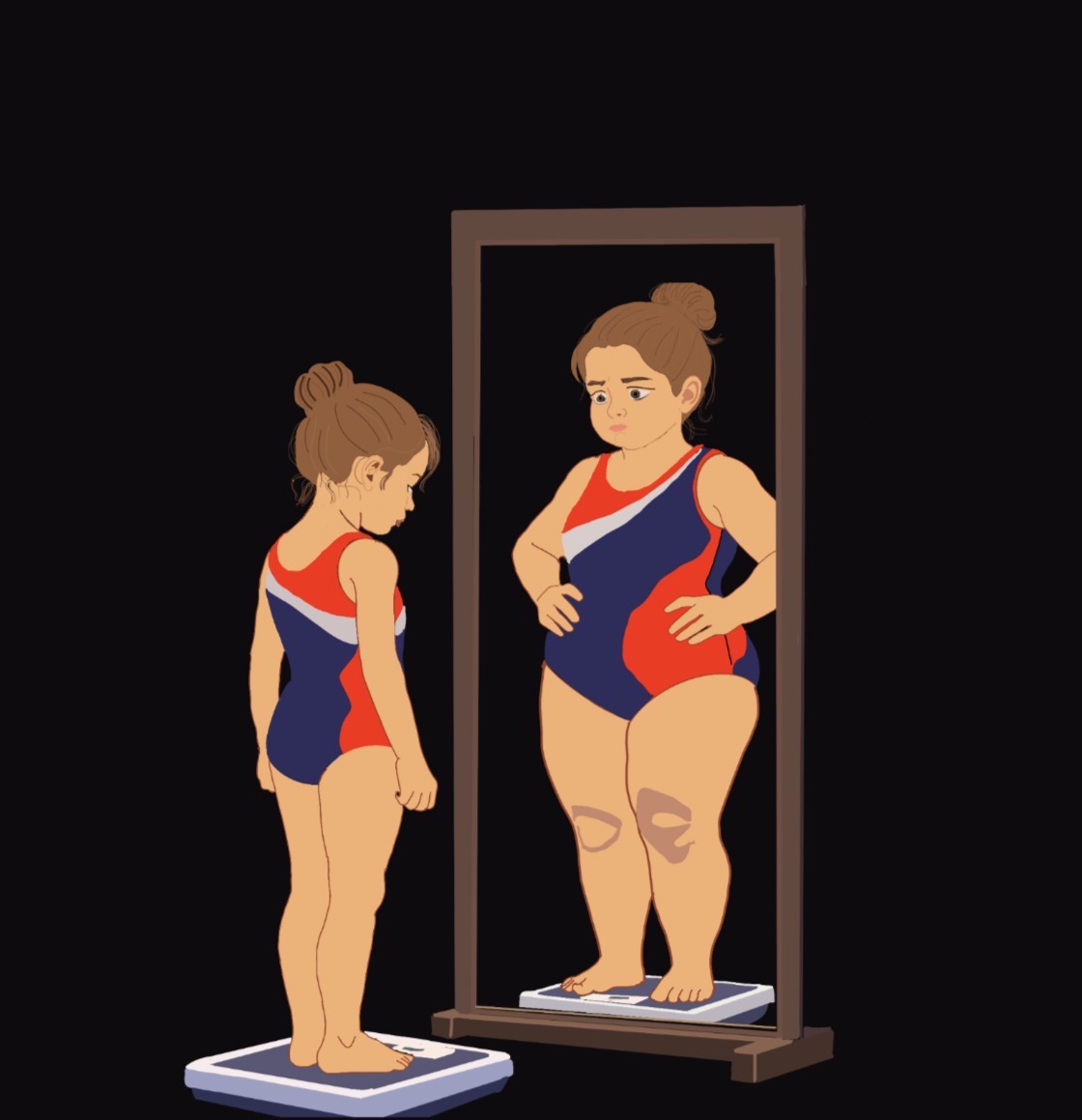
Sports such as cheerleading, gymnastics, dance and figure skating are often praised for their elegance and visual appeal, yet these sports are high-risk environments for athletes to develop a distorted body image and unhealthy perceptions of body weight. The sports emphasize a lean physique in these athletes, creating immense pressure among athletes to achieve a specific look. These sports highlight physical appearance, body size and presentation. This creates an environment in which performance and self-worth become closely linked to how an athlete looks, rather than strength or skill. Critical examination from judges, coaches and the media can result in body dysmorphia and eating disorders, particularly among adolescents.
In many acrobatic sports, revealing uniforms are treated as standard or even necessary, but they often intensify harmful self-perception in young athletes. The goal of these sports requiring tight clothing is to protect both safety and clarity of movement. When children are required to compete in tight, minimal clothing, they are constantly aware of their body shape and appearance. This continuous exposure can turn otherwise healthy features into perceived flaws, encouraging athletes to equate thinness with success and self-worth. Expectations from coaches and parents, combined with comparison to teammates, leads to constant evaluation of their bodies. Over time, the pressure to have the “right look” in these uniforms can fuel body dysmorphia, leading some to fixate on their weight and food intake as a way to meet unrealistic expectations. Instead of focusing on strength, skill and performance, revealing uniforms shift attention to appearance, reinforcing the idea that a person’s body is something to be evaluated rather than respected.
Objectification often becomes embedded in the culture of aesthetic sports, subtly teaching young athletes that their value lies in how they are seen rather than how they perform. Athletes in competitions are frequently judged on facial expressions, body lines and overall appearance, which can make them feel more like beauty contestants than competitors. This continuous evaluation encourages girls to view their bodies from an in-depth perspective, leading to self-surveillance and harsh criticism towards themselves. As people condemn these athletes based on physical appearance in sports can distort self-image and weaken self-worth, creating long-lasting psychological harm that extends far beyond the sport itself.
Transitioning away from toxic patterns and redefining one’s self-worth can protect body image in competitive sports. It starts by shifting focus from appearance to functional performance and strength. Embracing an athletic mindset can help to prioritize how the body feels and what it can achieve, rather than how it looks. Many endure anxiety alone, fearing that speaking up about their disorder would be interpreted as a lack of discipline or resilience. The stereotypes surrounding mental health can cause people to feel ashamed to speak out and lead them to not ask for help due to fear of judgement. However, if body image struggles were more openly acknowledged and actively advocated for, the stigma surrounding these experiences would be reduced. Through transparent dialogue, mental health education and institutional reform, athletes can be validated and supported. Greater advocacy would create a supportive environment in which young athletes could articulate their struggles without shame, ultimately reducing both the intensity of their isolation and the long-term psychological harm associated with body dysmorphia.
The culture surrounding aesthetics in sports must be critically reexamined to protect the well-being of young athletes. Revealing uniforms that emphasize physique over performance, combined with the objectification inherent in appearance-based judging, reinforces the harmful message that an athlete’s value lies in how their body is perceived, rather than what they can accomplish. This environment not only intensifies self-inspection and comparison, but also deepens the self-isolation experienced by those silently struggling with body dysmorphia. Meaningful change requires consistent advocacy to challenge restrictive standards, reforms to uniform expectations and prioritization of mental health alongside competitive success. By confronting these pressures directly, aesthetic sports can shift from spaces that cultivate insecurity to environments that foster strength, confidence and genuine self-worth.