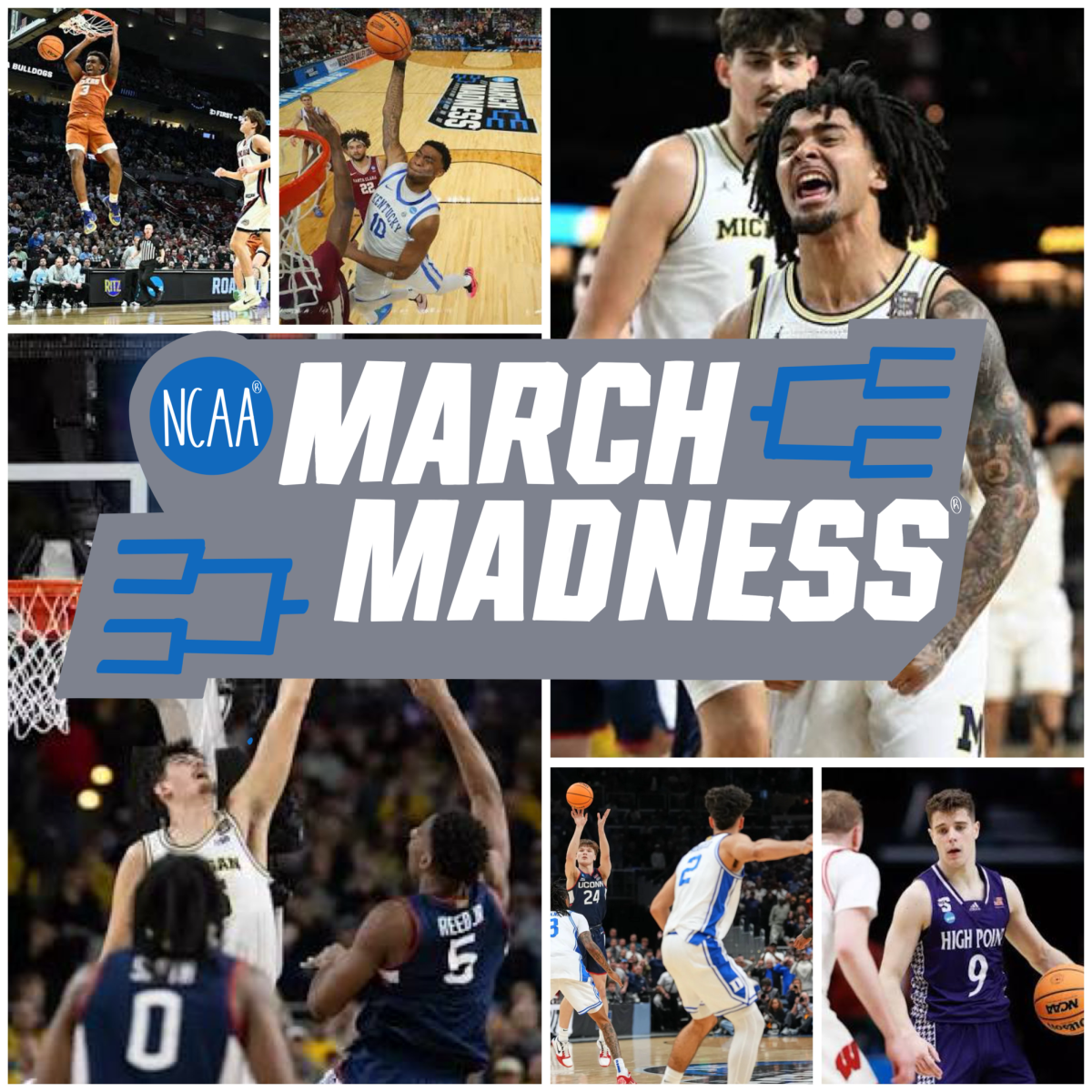

College basketball has finally reached its main event: the National Collegiate Athletic Association (NCAA) tournament, better known as March Madness. With the 68-team bracket set, it is time to predict which programs are built to survive the three-week gauntlet. The 2026 season has brought fans a blend of talented title favorites and experienced underdogs. Here are the teams most likely to define this year’s bracket based on seeding, efficiency metrics and recent form.
The Favorites
Duke Blue Devils (32-2): Duke enters the tournament as the number one overall seed behind National Player of the Year frontrunner freshman forward Cameron Boozer. While Boozer is a two-way weapon, shooting 53% from the field and 39% from three, the Blue Devils are not a one-man team. Coach Jon Scheyer’s squad has ranked near the top of the country offensively and defensively all season. Injuries to standout guard Caleb Foster and forward Patrick Ngongba II could thin the rotation, but if Boozer keeps playing at this level, Duke has the clearest path to the national title.
Arizona Wildcats (32-2): Arizona may be the deepest team in the bracket. Seven players average at least 8.7 points, and they are led by Big 12 Player of the Year guard Jaden Bradley and 16 points per game scorer guard Brayden Burries. Freshman forward Koa Peat adds NBA-level athleticism, while center Motiejus Krivas anchors one of the country’s most disruptive defenses. At an average height of 6-foot-9, far above the country’s average of 6-foot-5, the Wildcats are a tough matchup for any team. Arizona has already beaten top-20 opponents Florida, Houston, Kansas and UConn this season, an unmatched résumé.
Michigan Wolverines (31-3): Michigan starts a massive frontcourt featuring 2026 Big Ten Player of the Year forward Yaxel Lendeborg, alongside forward Morez Johnson Jr. and 7-foot-3 center Aday Mara. Built largely through the transfer portal, the Wolverines overwhelm opponents physically while still shooting an impressive 37% from three. Michigan finished the regular season ranked in the top five nationally in both offensive and defensive efficiency.
Florida Gators (26-7): The defending national champions lost their entire starting backcourt from last year, but Florida was still able to find their rhythm late in the year. The Gators closed out the regular season on an 11-game winning streak behind forward Thomas Haugh, a key player from last year’s title team, and dominant big man Rueben Chinyelu. During that run, Florida shot 59% inside the arc and 38% from three. With their offensive balance, the Gators have already proven they can play championship basketball.
The Contenders
Houston Cougars (28-6): Head coach Kelvin Sampson is known for his teams’ impressive defense and rebounding, but this year’s roster adds a dynamic star at point guard. Freshman Kingston Flemings averages 16.5 points and 5.4 assists and is projected to be a 2026 NBA lottery pick. Houston also ranks among the nation’s best teams at protecting the ball, giving them a style built for grueling tournament games.
UConn Huskies (29-5): After winning two titles earlier this decade, UConn is hunting for their third. Coach Dan Hurley still has veteran forward Alex Karaban, a holdover from the championship teams, along with experienced scorers Solo Ball and Tarris Reed Jr. The Huskies won 18 straight games from Nov. 2025 to Feb. 2026 and have the experience that helps teams succeed in March.
Iowa State Cyclones (27-7): Few teams have a better big three than Iowa State. Sniper forward Milan Momcilovic is shooting 50% from three, point guard Tamin Lipsey effectively runs the offense and versatile forward Joshua Jefferson averages nearly 17 points with seven rebounds and five assists. The Cyclones also have a top-10 defense in the NCAA. When their offensive skill matches their defense, they look like national champions.
Purdue Boilermakers (27-8): Purdue has one of the best offenses in the country, ranked #2 nationally, led by legendary guard Braden Smith, who averages nearly nine assists per game. Veteran wing Fletcher Loyer stretches defenses as a 42% three-point shooter. The Boilermakers started the season 17-1 before stumbling late, making them one of the more unpredictable contenders.
Michigan State Spartans (25-7): Coach Tom Izzo’s teams are known for disciplined play and low turnover rates, which consistently keep them in games. Michigan State wins with defense, rebounding and guard play from Jeremy Fears Jr., who averages 15.5 points and more than nine assists. The Spartans do not have many NBA prospects, but they do have the experience and discipline that could take Izzo to his ninth Final Fours.
Dark Horses
Arkansas Razorbacks (26-8): Head coach John Calipari often structures his teams through strong backcourt performance and freshman Darius Acuff Jr. might be the best one he has ever coached. Acuff averages more than 22 points and six assists, while shooting 44% from three, numbers that have produced several 100-point games for Arkansas. The question is: can Acuff continue his historic run throughout March?
Virginia Cavaliers (29-5): First-year coach Ryan Odom completely reshaped Virginia’s style. Instead of the slow offense the program was known for, the Cavaliers now shoot nearly half of their shots from three while still playing elite defense. Virginia’s deep rotation has seven players averaging over eight points, an indicator of potential tournament success.
Kansas Jayhawks (23-10): Kansas has the talent to beat anyone, but the consistency of a middle seed. Freshman star guard Darryn Peterson is the projected first overall pick in the NBA draft, but injuries limited him for much of the season and impacted the team’s chemistry. If Peterson plays like himself, Kansas could shock the country and take home the national title.
Other teams to look out for: Vanderbilt Commodores (26-8), St. John’s Red Storm (28-6), Gonzaga Bulldogs (30-3) and Nebraska Cornhuskers (26-6).
Dangerous Lower Seeds
UCLA Bruins (23-11): University of New Mexico Transfer guard Donovan Dent struggled early but caught fire late in the season, averaging nearly 16 points and 11 assists during a seven-game stretch that pushed the Bruins into the tournament.
Saint Louis Billikens (28-5): Saint Louis shoots 40% from three and features Atlantic 10 Player of the Year Robbie Avila. As a mid-major offensive powerhouse, the Billikens can score with anyone.
Other teams to look out for: Iowa Hawkeyes (21-12), Santa Clara Broncos (26-8), UCF Knights (21-11)
Upset Candidates
Miami (OH) RedHawks (31-1): Miami finished the regular season 31-0 before losing in the Mid-America Conference Tournament. Guard Pete Suder leads a balanced offense capable of winning down the stretch. With a relatively weak regular season schedule, the RedHawks will be eager to prove the legitimacy of their perfect regular season record in the big dance.
High Point Panthers (30-4): High Point dominated the Big South Conference, ranking first in both offensive and defensive efficiency in conference play. The Panthers force turnovers on 22 percent of possessions, a worrying stat for potential opponents.
Texas Longhorns (19–14): Texas enters the tournament as an 11-seed after surviving the First Four, edging NC State 68–66 behind a late game-winner from guard Tramon Mark. Texas is led by guard/forward Dailyn Swain, who averages 17.7 points, 7.6 rebounds, and 3.4 assists, giving the Longhorns a reliable all-around presence. While their record is modest compared to others in the field, Texas has shown it can execute in tight, high-pressure moments. Their first-round matchup against BYU presents a major challenge, particularly in containing forward AJ Dybantsa, but if Texas can control tempo and lean on its physicality, it has the profile of a team capable of pushing past expectations.
Other teams to look out for: Akron Zips (29-5), Hofstra Pride (24-10) and Furman Paladins (22-12).
March Madness rarely rewards the most talented rosters. Historically, teams with strong guard play, defensive discipline and late-game experience have been rewarded with championships. This year’s bracket may begin with clear favorites, but as always, the real story will likely emerge from the teams that disrupt expectations.