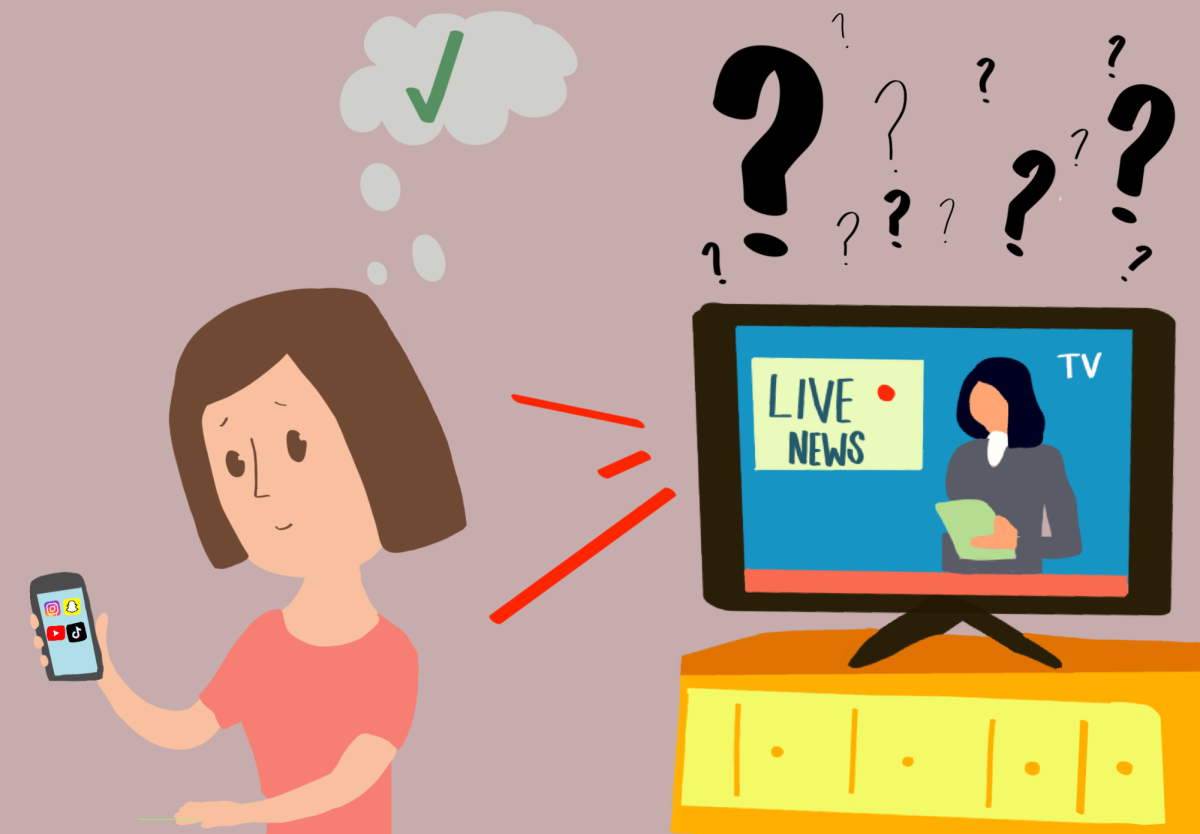

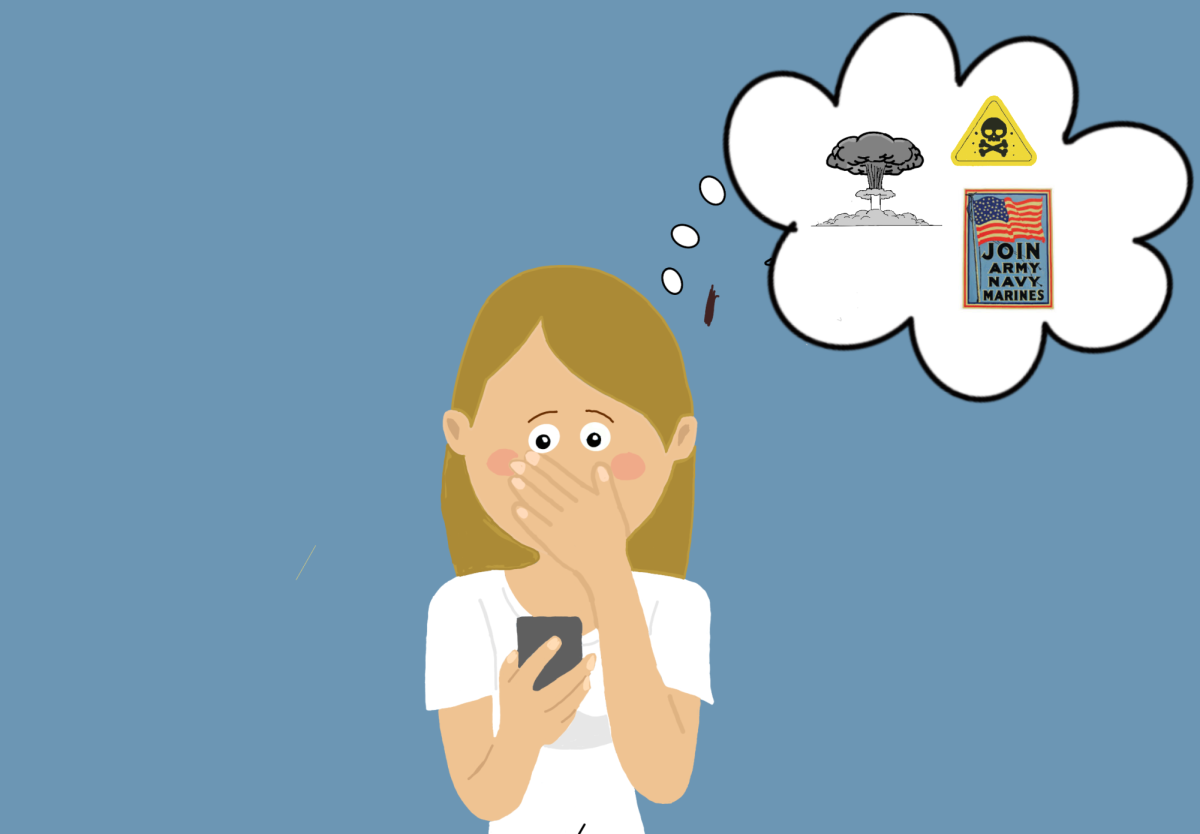
During times of civil unrest, many turn to social media platforms, like TikTok and Instagram, to follow recent news. Due to this, many creators take that as an opportunity to spread misinformation to their viewers; which boosts their platform and brings them fame. This tactic is commonly referred to as fearmongering, which is the action of purposefully invoking fear about a certain topic.
With the United States current conflict with Iran, it is easy for people to confuse what is truly happening with misinformation being spread on social media. Recently, users have begun claiming that there will be a military draft. However, a draft has not been used during times of war since the Vietnam War, meaning for several recent wars, like Iraq and Afghanistan, a draft was not used. The peacetime draft has been standard since the 1940s, so a draft for this conflict is highly unlikely. A common misconception across the internet is that women could possibly be drafted. Many creators on social media platforms have been suggesting ways for women to dodge to draft, suggesting things such as getting pregnant, being over or under the weight limit or to get admission to a mental hospital. However, a military-draft involving women is extremely unlikely; the Selective Service Act of 1917, made during the First World War, states that the U.S. government can keep an all-male registration system to be used for the draft. The law only requires men aged 18-25 to register; therefore, by law, women cannot be drafted. The concept of selective service seems daunting to many, but it is unrealistic and will likely not happen. Nevertheless, when a large percentage of social media is claiming something, it is hard to disprove it, especially when influential creators are perpetuating the idea. Hearing individuals with big platforms argue that something will happen can add to the panic and stress of the situation.
Similarly, the World Health Organization (WHO) released a statement saying that they are preparing for the worst case scenario: nuclear war. Although this sounds daunting, it is just a precaution, as the organization must prepare for the worst, even though it’s not likely. Upon hearing this, many social media users and creators have spread that nuclear war is imminent, which is causing widespread worry to people. This spread of misinformation causes people to believe the government is not telling them the full story; creating feelings of mistrust.
Recently, when the Epstein files were released, Jeffrey Epstein’s alleged connection with Leon Black, a financier and former CEO of Apollo Global Management, a company that owned Fluttershy, the parent company of Lifetouch, that commonly takes school pictures for children grades K-12. Upon the discovery of this information, thousands of concerned parents and people whose school pictures were taken by Lifetouch flooded social media with posts about the situation. People claimed that the company was sharing pictures of minors with Epstein and even reaching as far as to claim that the school pictures were being used as a catalog for pedophiles. However, this is not true, as Epstein had no connection to Lifetouch itself, as a connection to the CEO does not necessarily mean access to the photos taken by Lifetouch. Content creators fearmongering on social media platforms has become a large issue in recent months due to a rise in civil unrest.
There are many ways to combat the misinformation being spread, such as doing research to disprove theories that are being perpetuated online. One way to remedy this is by making sure to organize your feed. Blocking or scrolling past fear-mongering posts or creators can help lower the stress. Another way is to use resources such as local news stations and google to verify information you hear online. Taking breaks from social media and understanding why people use fearmongering tactics are also helpful in easing your nerves and staying informed.
All in all, people should refrain from using social media as their only source for news, as the spread of misinformation is common on social media. Preventing the spread of misinformation helps decrease the amount of fearmongering that grows on social platforms. Fearmongering can cause the people that view the content to become anxious and worried, and there is no one who is ‘safe’ from fearmongering as it can affect any social media user.