
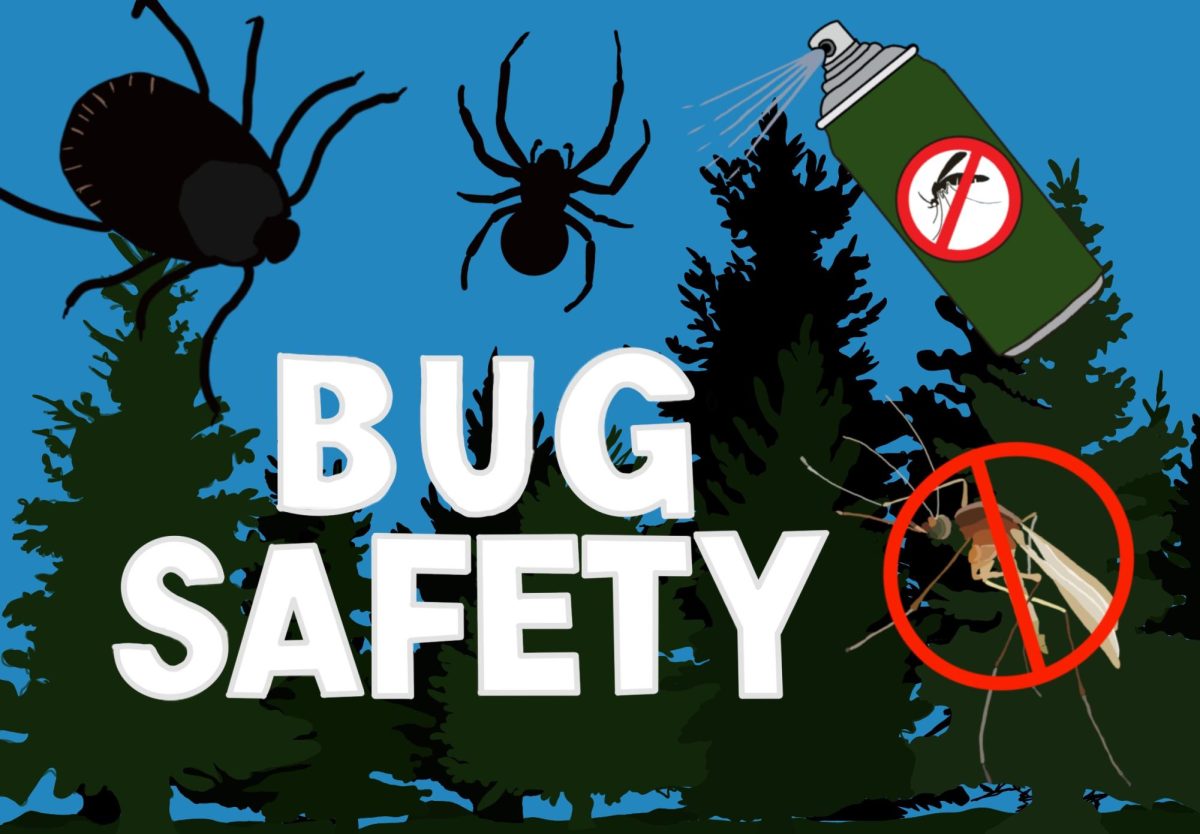
With warm weather approaching, bugs become a larger problem. As people spend more time outside, they are more likely to get insect bites. Although most only cause mild irritation to the skin, some can cause further health issues and concerns. To minimize these risks, being educated on how to use bug repellent is very important to prevent any serious illnesses or infections that can occur from insect bites.
Common reactions to bug bites for many include redness, swelling, itching and welting on the skin. These reactions are caused by the body’s natural immune response of sending histamines, a chemical in your immune system, to the skin to combat the saliva, venom or eggs being implanted in the skin by the insect. Skin infections also often occur because scratching the bite can cause damage to the skin’s barrier, allowing bacteria to enter the body which can lead to infections like cellulitis, abscess and impetigo, which all cause painful itching and swelling. Although less common, allergic reactions are also a concern, which can lead to a rash, or even more serious reactions like hives or anaphylaxis. This type of reaction is especially common after severe bee or wasp stings.
Vector-borne illnesses, diseases caused by parasites, viruses or bacteria that have been transmitted by living organisms, can also be transmitted when an insect bites. Bugs like mosquitoes can transmit illnesses such as the West Nile Virus, Malaria, Dengue Virus, Zika Virus and Eastern Equine Encephalitis (EEE). Measles has additionally become a more common concern as vaccination rates have been steadily declining in recent years among children. With many of these diseases being potentially deadly, the American Mosquito Control Association reported that over one million people die every year from mosquito-borne illnesses. Diseases like West Nile Virus and EEE do not currently have any vaccines, making them life-threatening for anyone who contracts them. The Centers for Disease Control (CDC) have continuously stated for many years that mosquitoes are the most deadly animal in the world. Ticks also often carry diseases like Lyme disease, anaplasmosis and babesiosis and can be dangerous to anyone who does not take the proper safety precautions by wearing bug repellents.
The most effective insect repellents often include ingredients like Picaridan, diethyl-meta-toluamide (DEET) and IR3535. These ingredients offer the longest lasting protection from insects and are all Environmental Protection Agency (EPA) approved. Brands like OFF!, Deep Woods Insect Repellent, Sawyer and Cutter Backwoods Insect Repellent are all strong options that are highly recommended by the EPA. Some essential oils like Lemon Eucalyptus Oil, Citronella Oil and Peppermint Oil are also used in bug repellents. Although products with these ingredients are effective, they typically need to be reapplied every 45 minutes to 2 hours to remain effective because they evaporate easily. Essential oils tend to be less useful when exposed to water or sweat and can cause mild skin irritation for some people. Covering skin with longer pants and sleeves also helps to prevent any bug bites as there is less exposed skin for the insects to find. Using these insect repellents is especially important when visiting an area with a high bug population like forests or swampy areas.
Proper protection from bugs is necessary to protect oneself from dangerous diseases that are spread by insects and from insect bites, especially when the temperature rises and the weather becomes nice. Using effective repellents can decrease the risks that bug bites bring and can make spending time outside more enjoyable as bugs are not as big of a problem.