
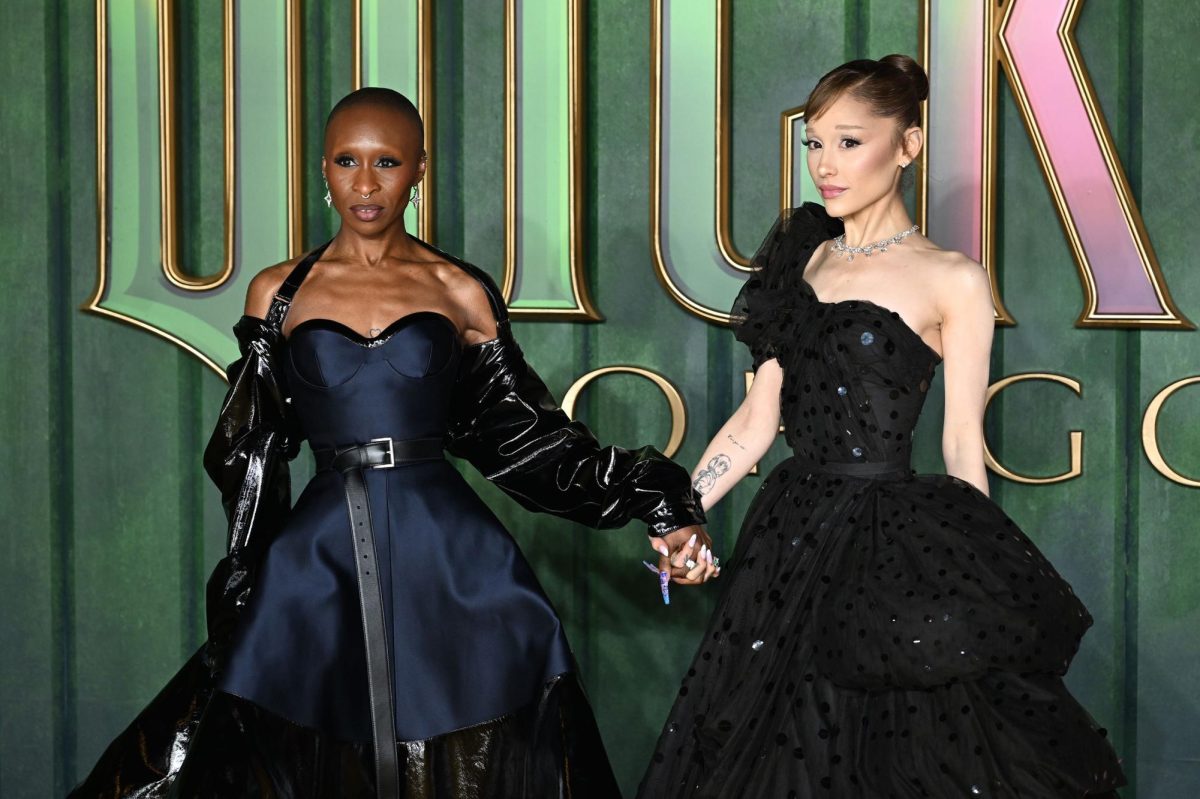
“Wicked: For Good,” the sequel to “Wicked,” was released on Nov. 21, 2025. Since the film’s debut, it has sparked widespread online controversy surrounding body image and the actors’ appearances, especially regarding the weight of leading cast member, Ariana Grande, who played the role of Glinda. At public appearances and across social media, fans have observed that Grande seems to have lost a significant amount of weight. The conversation has quickly shifted from the film itself to about her physical appearance, raising concerns about how the visible thinness may shape audience perceptions of what is considered a “normal” or “healthy” body, especially among younger viewers.
The criticism, however, has not been limited to Grande alone. Cynthia Erivo, cast as Elphaba and Michelle Yeoh, who plays Madame Morrible, also appeared to be visibly slimmer during the film’s production. While much of the attention has been centered around Grande; the recurring presence of extremely thin body types among multiple leading women in the film reinforces a broader Hollywood pattern. With several well-known actresses in the same film appearing underweight, it becomes harder to frame the issue as an isolated situation. Instead, it reflects an industry standard that continues to prioritize a slim body image ideal.
Discussion surrounding the cast members’ appearances has gained traction across entertainment outlets and social media platforms. Some commentators argue that focusing on an actor’s body sets harmful standards and distracts from their work; however, it is equally as important to recognize that silence around these patterns allows them to continue. The repeated exposure of immensely thin bodies in mainstream media sends a subtle, but powerful message about attractiveness and success, particularly in films with large teen and youth audiences like “Wicked.”
Although speculating about any individual’s health is invasive and unproductive, ignoring the broader pattern would be equally ignorant. The real concern is not one person’s body, but the repeated promotion of a single, yet extremely thin body standards in major films. When Hollywood consistently centers this body type, it reinforced limited ideas of beauty and success, especially for young audiences. Redirecting the conversation from personal judgment to industry norms allows for a more meaningful discussion about representation and cultural impact.
The controversy surrounding “Wicked: For Good” extended beyond one actress or one film. It reflects an ongoing tension between respecting individual privacy and acknowledging systemic issues in entertainment. While speculation about an individual’s health is inappropriate, the larger conversation about body standards in Hollywood is necessary. As the film remains a commercial success, discussions about its performance continue alongside an equally important debate about representation, visibly and the responsibility of media consumers in shaping cultural norms.