
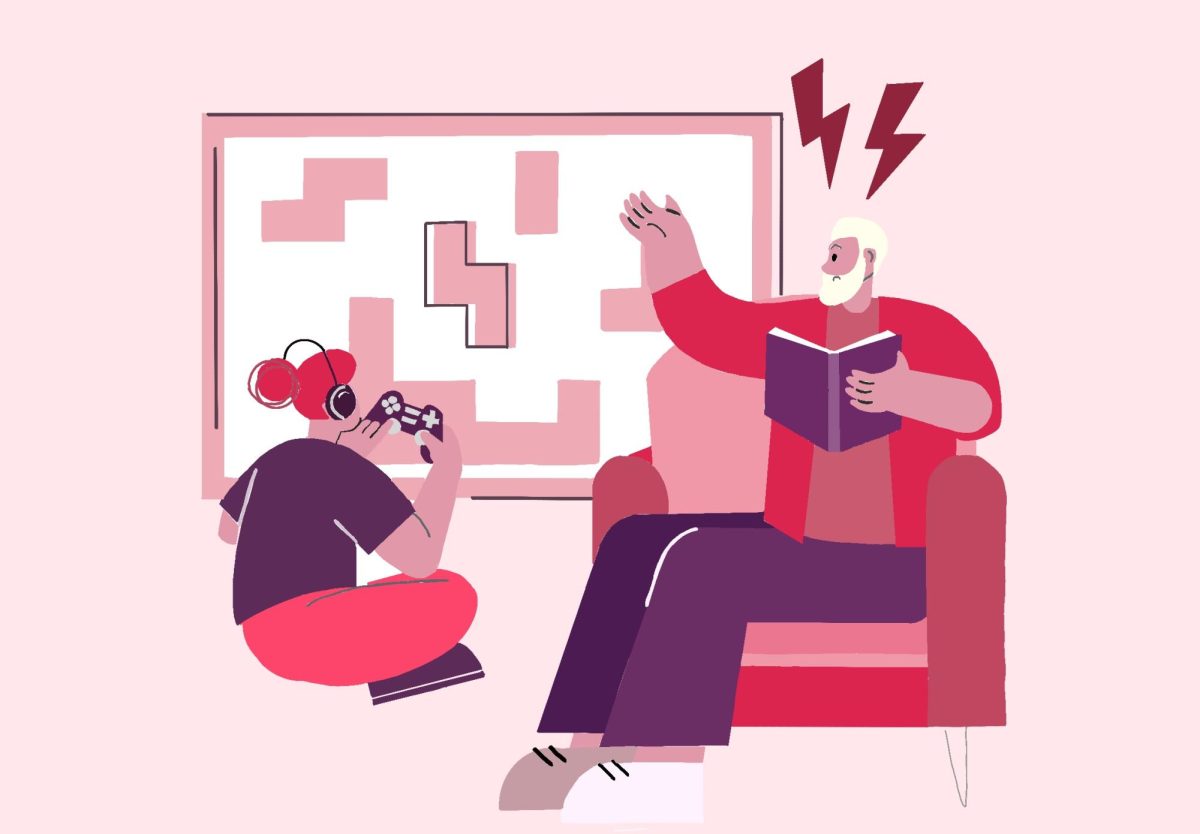
People of different generations often have varying ideas of what may be considered appropriate to say to another person. What an individual of one generation might feel is offensive, another may feel is perfectly acceptable. They might not see the harm their words can cause one another. While there are certainly people from all generations who are comfortable speaking their mind, there is often a generational divide regarding what is acceptable.
In observing conversations between the Baby Boomer Generation, Millennials and Gen Z or Gen Alpha, these differences are often highlighted. An older person could be unaware that what they are saying may be insulting to a younger person. Oftentimes, they believe that they are simply making conversation, but are actually harming a person’s confidence and feelings by commenting on their appearance, actions and political or personal opinions.
It is not uncommon to find an elderly person who is used to speaking their minds, often interrupting others when they find that the person they are talking to has opinions that they do not view as valid. However, younger people tend to prioritize inclusion of others and their opinions being listened to, making a younger generation that specially speaks out when these priorities are being disregarded. People do not know that they are creating divides when they interrupt others, but the experience sticks with younger people and their relationship can slowly grow apart.
One reason that older people cannot grasp the severity of the disrespectful way they act is explained in a study published by the British Journal of Psychology which highlights how older people are worse at understanding mental diversity than younger adults. Mental diversity is the natural difference between brains, whether it’s in how they process information, their thinking styles or cognitive abilities. This is known as the “theory of mind,” a social skill deemed necessary for people to identify when they have done or said something wrong.
Elderly people understood the social norms that were present when they were young, but those norms are constantly shifting and what sayings might have once been accepted then are taken as offensive now. For example, commenting on the amount someone has eaten was often regarded as acceptable in previous decades, but now, the observation would be taken as an insult by many.
In many cases, people from older generations can get confused over shifting pronouns, which is understandable because there is so much new information they are trying to process. However, others can take offense to the fact that it seems that elderly people are not even trying to consider how people want to be referred to. As the LGBTQIA Resource Center points out, there is no correct, exhaustive list of pronouns and any combination can be used. This often leads to elderly people often being overwhelmed, making them decide what they believe the person identifies as based on looks alone, instead of taking the time to ask.
These insults have been occurring for many years, but the current age is identifying them more than in the past because of their hyper-awareness. This hyper-awareness is due to their constant connection to social media which fosters inclusivity. Another reason that younger people can speak out more freely against the offensive actions of older people is because the elderly are now seen as less of authority figures than they previously were. They once were feared and no one would ever think of talking back to them, but now that perception has shifted to them needing to be corrected.
With the rise of the internet, social media and the accessibility of information they provide, there is a much larger focus on the impact of parenting and how to speak to children, teens and young adults. When older generations were parents of young children, they relied much more on how they themselves were raised and the experiences they had to drive how they parented. There was not the same focus on parenting as there is now. For example, parents could often be unknowingly judgmental towards their own kids for a variety of reasons; such as their diet, actions and sexual identity. Their kids viewed these as insults and may have even resented their parents due to their upbringing. Now, when these kids that experienced this begin to have children of their own, they make it a point to stress to their kids that their actions will be accepted. This lesson taught by parents explains why the younger generation is so against the insults they often encounter and will often say something when older generations are acting rudely.
Elderly people often feel stuck in their generation and have a hard time adjusting to change, which is one of the reasons that they act in such an outdated manner. As elderly people’s parenting influenced their children’s actions, their parents influenced them as well. A reason that the elderly people act this way is because their parents taught them to “only speak when spoken to” and to “respect their elders.” These philosophies stick with them and they believe that other people should behave the same. When they do not, elderly people often get extremely offended.
What the elderly view as simple commentary on the things around them is often seen as purposely offensive to younger people. This creates a gap between the generations, which angers the older generations because they feel like they are being cast aside due to their age, creating an endless cycle of insults and silent regret in a relationship. Even though older people do not realize in the moment that they have said the wrong thing, they can see the long term effects that cause people to draw away from them. Elderly people sense this, realize they have done something wrong, but cannot fix it, as they do not know what they did wrong.
There is a constant debate over what is appropriate for people to say and there is no doubt that older people are often saying things that could be viewed as inappropriate. Even though it may seem offensive when older people comment on something, it is important for one to remember that they often simply do not know they are actively being rude.