
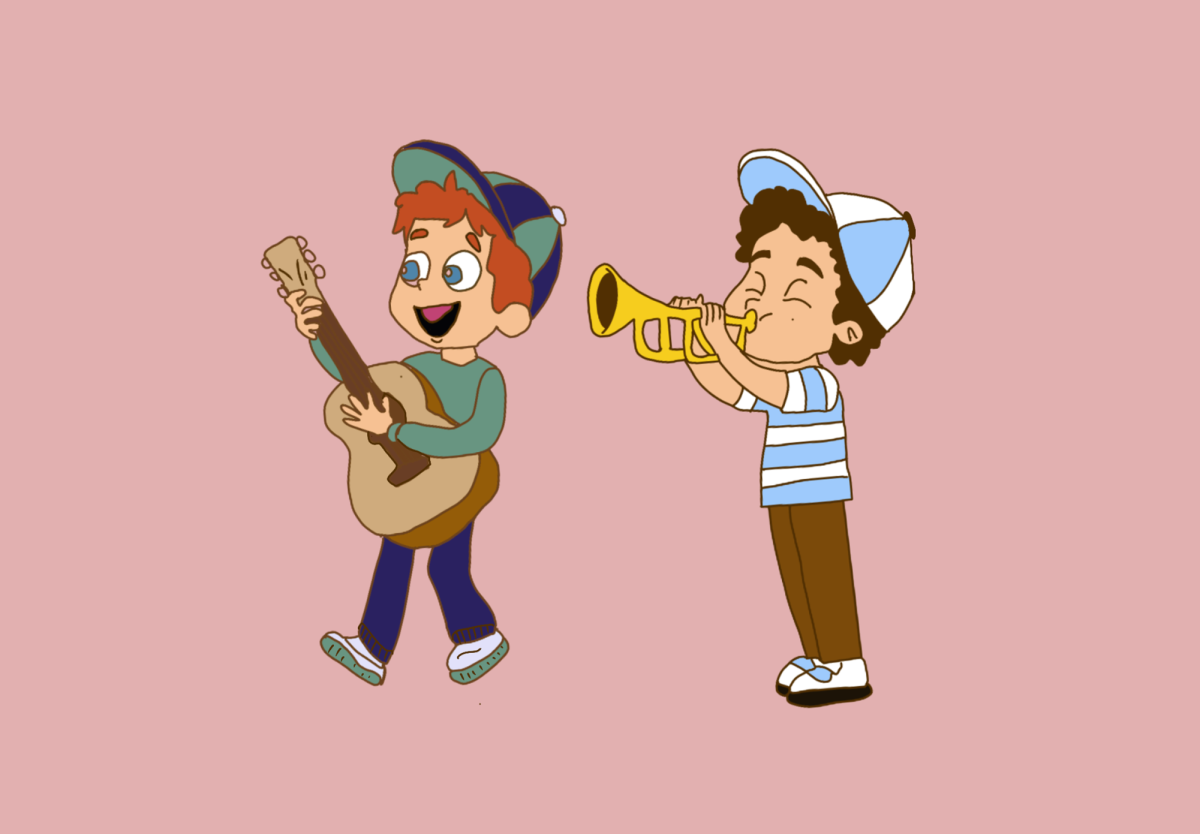
As adults, many recall being signed up for instrumental lessons by their parents when they were children. These studies often lasted for hours and required high levels of patience and determination as a result of the attention-to-detail needed for one to play an instrument correctly. From a child’s perspective, being forced to play an instrument may seem boring; however, learning how to play any instrument is a very beneficial practice for a child’s brain and development.
One of the most significant benefits of learning an instrument at an early age is the impact it has on a child’s psychological development. Learning how to play an instrument requires many different skills from the performer. To play an instrument correctly, one must be able to simultaneously process visual, acoustic and motor information at fast speeds. This exercises a huge amount of sensory stimulators in the brain, which strengthens neurogenesis. Neurogenesis is the process by which nerve cells are created from neural stem cells in one’s brain. When a child accelerates the development of neurogenesis through learning an instrument, they increase the amount of gray matter in regions of the brain that relate to memory, motor skills and auditory processing. Additionally, playing an instrument as a child also helps to strengthen the bridge between brain hemispheres. Strengthening this bridge at an early age improves problem-solving and communication abilities. All of these are fundamental skills in adult life and learning an instrument as a child increases the development of these skills.
Furthermore, musical education can help to support academic enhancement in young children. Learning an instrument increases brain plasticity, which allows the brain to adapt to certain situations, create new connections and learn things faster. Due to this ability to learn new skills more rapidly as a result of flexible neural networks, young musicians can pick up academic topics easier than their peers, such as math or science because of the ability to easily recognize patterns and equations. This eventually also allows more educational opportunities for the future.
Learning an instrument at a young age also assists with emotional and social development. Playing an instrument is one of the easiest ways for children to express themselves. In situations when a child doesn’t yet know how to use words to describe their emotions, children who know how to play music can perform certain compositions to convey what they are feeling; having an easier time addressing them and finding a solution. This can help emotional regulation, allowing for them to have better social skills. Moreover, being in a band or an orchestra can formulate team work and cooperative skills. As a child, getting along with peers and making friends can be extremely challenging due to having a lack of social awareness which can manifest bluntness in conversations However, developing these skills through social interactions and bonds created through music can help foster them.
Ultimately, learning instruments at an early age can be viewed as tedious due to the long hours of commitment, practice and patience needed to master the skills. However, the end results are worth it due to the skills and benefits that come with early introduction to music. Developing social, emotional and learning skills at an early age can help shape one’s personality. In contrast, learning an instrument as an adult or teenager is still completely possible. While the benefits that come from learning an instrument as an adult are not as impactful as they are for a child; they still can help improve psychological capability.