
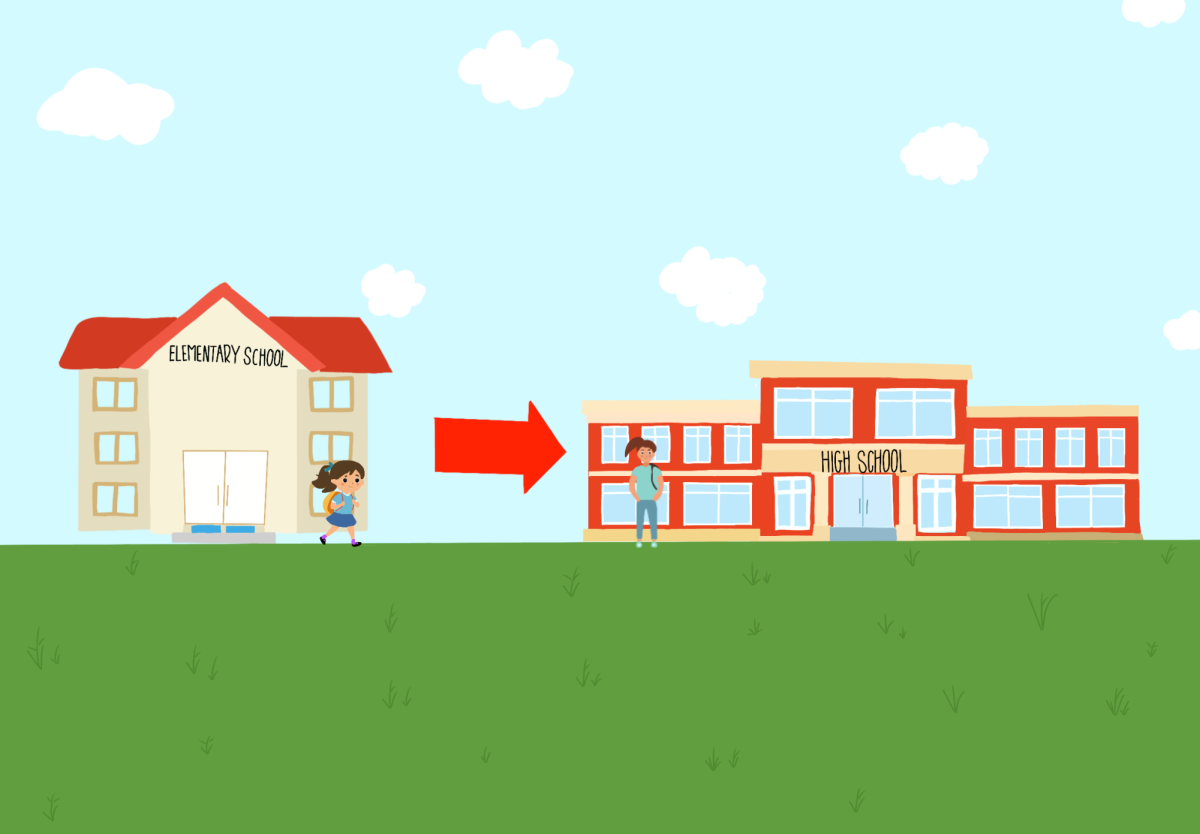
The years during the lives of students in elementary, middle and high school can be challenging for most because many do not have a direct support system to give them advice or a second opinion. Creating a more connected and involved community will have a powerful influence on students’ academic success, confidence and life skills. High school students supporting elementary school students would encourage one-to-one student support systems and allow for students to feel more comfortable when facing any unknowns about their academic futures.
According to the National Literacy Institute, around 40% of students across the nation and 70% of low-income household students are unable to read at their grade level. This “literacy crisis” has continually been affecting a number of kids throughout the nation since 2015 — not beginning with the COVID-19 pandemic contrary to what most people assume. Beyond high school education, about 54% of American adults read below a sixth grade level. A mentorship would allow for more chances for the younger student to learn how to properly read and succeed academically. Mentors would be able to give the elementary school student more individualized feedback and support that an everyday teacher may not be able to offer. The high school student can assist the student by focusing on phonics and comprehension with repetition. Students who may fall behind in their everyday classes may strongly benefit from a mentorship with an older student, which can allow them to receive a more in depth understanding of the material that the student is currently learning.
“When structured appropriately, it could support both academic growth and mental well-being in ways that traditional classroom structures often cannot due to time constraints and increased class sizes. A high school mentor could reinforce core skills like reading, writing and basic math through repetition and conversation, which are key to long-term retention,” Christine Cantrell, a teacher who recently transitioned to Walpole Middle School and previously taught at Elm Street School, said.
The constant support of another student would provide the elementary schooler with a positive and motivated environment that would improve their self-esteem. While growing up, it is crucial that children have an outlet to express any doubts or concerns both academic and personal. With constant stress from social media, grades and extracurriculars, it is important that students have another student to seek advice as they may feel more open to the idea of confining in someone close to their age rather than an adult.
“I think the positive mental and emotional impact would be just as powerful and arguably more important. That consistent connection would reinforce the fact that they matter, which in turn will boost self esteem. In addition, students who associate learning with supportive relationships are more likely to stay engaged and hopefully experience less school related anxiety,” Cantrell said.
To understand behavioral challenges with students, it requires observation and identification of individual needs. Common issues such as disruptions in class or difficulty following instructions are all signs that both teachers and mentors must figure out how to come up with solutions to these common flaws. Research from the Mentoring School has shown that students who are involved in mentoring programs display enhanced academic performance, better self-esteem and improved behavior. The supportive foundation of mentorships assists the student in developing strategies to cope and resolve conflict, which would further help decrease common behavioral issues.
“I have seen an increase in attention difficulties, emotional regulation issues and social conflict resolution in elementary students. It’s not that the students are necessarily ‘worse,’ I just think there have just been fewer opportunities for them to practice in-person social skills,” Cantrell said.
This intentional pairing between high school students and elementary school students would not only broaden the high schoolers perspective but also give them life skills such as learning how to adapt and explain advice to a younger individual, while also giving the younger student a role model and person to look up to.