
As modern day technology progresses, many devices people use in their daily life are affected. Cars have come a long way from when they were first created, and they now have crucial features such as seat belts and airbags. With these advancements, car safety has increased greatly; however, some technological changes are more harmful than beneficial.
Built-in technology is often found helpful for drivers, as the ability to use smartphone pairing in order to message, navigate and access music apps is beneficial. Microsoft teams are now involved in the production of cars made by Mercedes-Benz, allowing drivers to take video calls while they are on the road. However, many have expressed concerns about the distraction that can occur as a result of being on video. If the driver is focused on devices and not the road, it is dangerous for everybody around. When driving, the driver should only be focused on controlling the car, not distracted by the technologies on the dashboard.
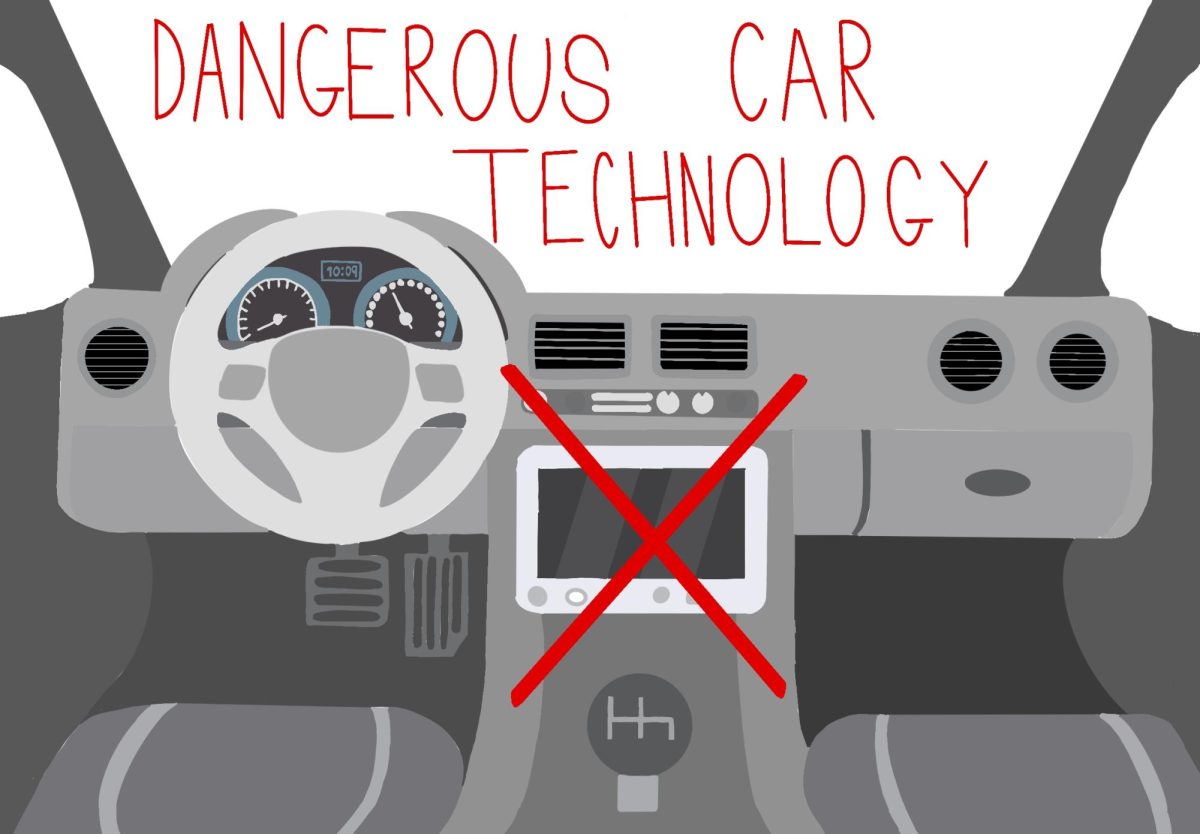
When using touchscreens in a car, interaction uses the same amount of visual, manual and cognitive resources as texting while driving according to the Transport Research Laboratory (TRL). When people use different resources to navigate the dashboard, their attention is being taken away from the road. Many oftentimes focus on their screens for controlling things such as music, directions, and temperature more frequently with the features so easily accessible.
When a driver is interacting with touchscreens, they are slow to pick up on certain things in their surroundings. A driver’s reaction time increases when they are engaged with the dashboard, according to a study conducted by the TRL. Performance of drivers when using the dashboard or another item was compared to drivers not completing a secondary task. The distracted drivers’ reflexes were severely slower than the focused drivers’. As cars progress technologically, physical buttons have transformed into touchscreens, giving the driver extra distractions. Modern cars can feel more like a computer and less like a form of transportation. To combat the dangerous nature of touchscreens, the Australasian New Car Assessment Program (ANCAP Safety), a car safety program in Australia and New Zealand, has asked car manufacturers to re-integrate buttons in their designs for driver safety. These changes will include physical buttons controlling headlights and windshield wipers once again. Implemented because of the National Highway Traffic Safety Administration’s (NHTSA) information that 29% of car crashes are a primary result of human distraction, they believe that there are only so many things to distract a driver in a car, and that those items should be removed from the environment.
With the technologies being integrated into cars, drivers can increase the risk of becoming too reliant on these advancements. If drivers are used to a very advanced car, when they use cars that do not have special features, they may feel lost. Back up cameras and visual aids have become necessary to many, because people are used to the benefits they provide. If people do not have access to these features, the level of their driving decreases. The trust in these features leads to a false sense of security, resulting in dangerous driving. To avoid this situation, these features should be removed altogether so all drivers are comfortable with all types of vehicles.
If a driver is not focused while they are driving, they become capable of causing immense harm to themselves and others. There are many different ways to become distracted while driving, but with current technologies, the confusions are embedded into the object one is supposed to keep their focus on. Because of these confusions, vehicles become even more dangerous, and it is important for drivers to stay on task.