
With technology becoming a more prominent aspect in children’s lives, teaching future generations the best way to learn can be difficult. Simple tasks, specifically fine motor skills, are declining rapidly within children from infancy to 8-years-old. Time previously spent on activities such as being outdoors and reading are being replaced with screens. Basic abilities for kids such as zipping a zipper, turning pages and holding pencils are becoming more difficult. However, many tools and techniques can be used in order to stop future fascinations to these screens.
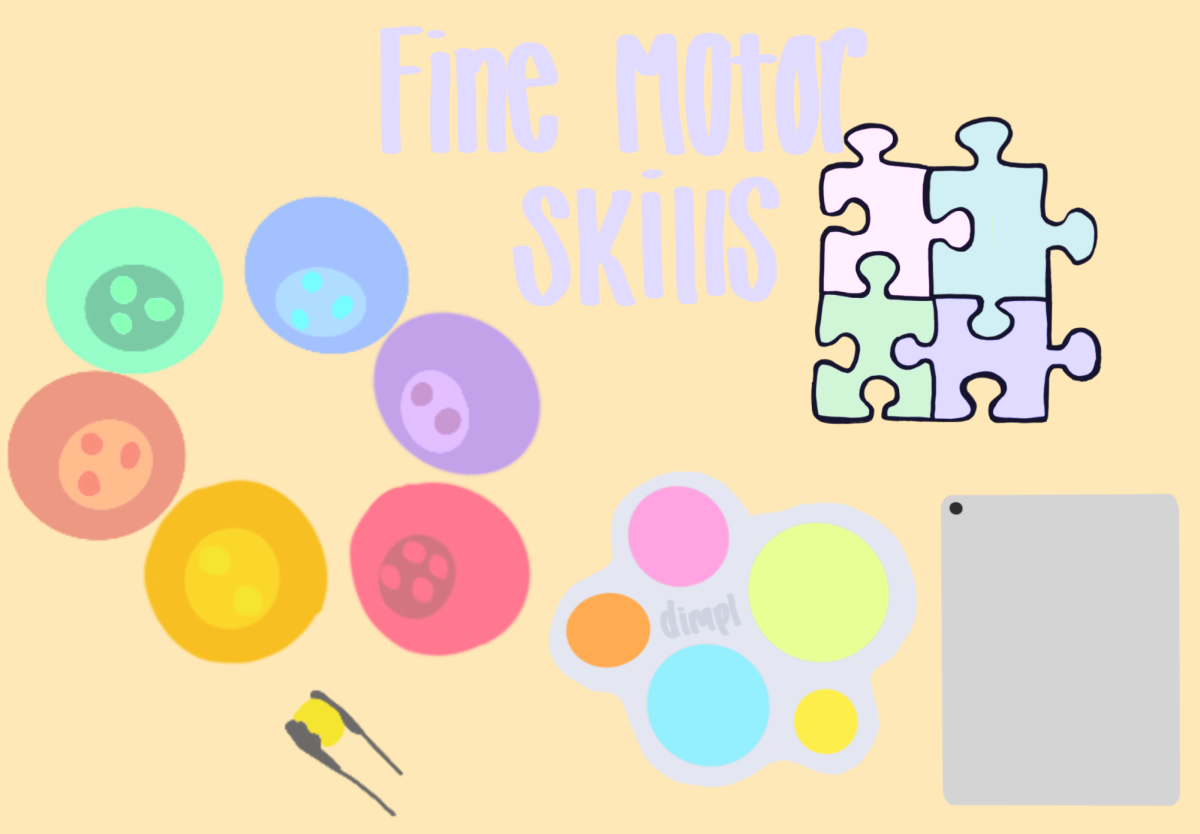
Brain-stimulating activities are great ways to engage and strengthen fine motor skills. Puzzles, fidget toys and simple arts and crafts are perfect to occupy the brain for short amounts of time. Additionally, the amount of books read weekly by kids has significantly declined within the past decade in classrooms and at home, which is mainly due to the increasingly normalized amount of technology in everyday life. Puzzle books, flip books, picture books and easy-read chapter books are simple ways to include books back into a young person’s life. Books help improve motor skills by engaging fingers and hands, which also can build hand strength for writing and other activities.
Each progressing year of a child’s youth comes a set of “milestones” or simple skills that they should be able to reach and do. According to Children’s Hospital of Richmond VCU, for infants 0 to 12 months, some simple skills include being able to swing their arms and legs, pick up toys, bring objects to their mouth and put them down and the ability to point at things. Children ages 1 to 2-years-old should be able to clap their hands together, wave and use both hands to engage in activities. Closer to 2 years old, they should also be able to turn pages of a book, build a small tower with blocks and put rings on a ring stacker. These developmental steps are crucial for each child to meet in order for proper growth.
Although many parents reach for electronics due to its accessibility and simplicity for their kid, there are many solutions to prevent early obsessions to these screens. When engaging with children in play, a variety of senses should be incorporated: touch, taste, smell, hearing and appropriate visual entertainment. Ensuring these senses are part of everyday youth life is crucial for future development.
Slowly decreasing the amount of technology and improving fine motor skills will create a healthier and happier generation. With the plethora of accessible resources for families to use to help strengthen their child’s fine motor skills, following youth will have refined motor skills.