
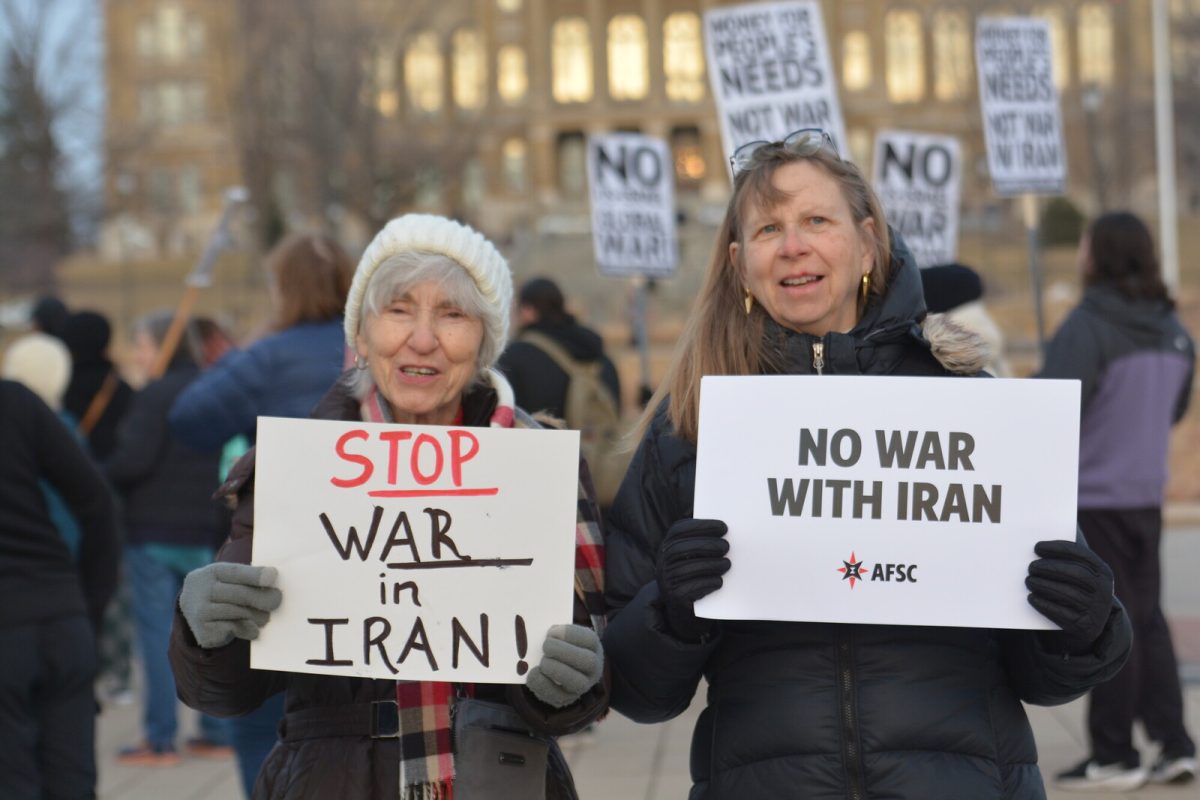
For several centuries, the United States and various countries from the Middle East have had ongoing conflict. As a result of the Gaza War, the Middle East’s collection of wars and overall instability is known as the “Middle Eastern Crisis.” However, on Feb. 28, 2026, this crisis quickly escalated as Iranian Supreme Leader, Ali Khamenei, was killed after the U.S. organized a surprise attack on multiple cities and military bases across Iran. This resulted in Iran fighting back with thousands of drones and weapons on American military bases located in the Middle East. These ongoing attacks, evolving into harsh war, have many years and motives fueling them and the dissension between the two opposing regions arguing.
In 1953, the rough relations between the two nations began to initiate after issues over control of oil. Iran contained many oil factories in which Britain was involved. After Prime Minister Mohammed Mossadegh was elected, he nationalized Iranian oil, making it strictly only available to Iran, taking those resources away from Britain. This deeply angered the British, so much so that British intelligence worked alongside the Central Intelligence Agency (CIA), to create propaganda and protests against Iran in an attempt for their share back. After several failed attempts, the British were eventually able to get their 40% ownership back in the oil industry and Mossadegh was replaced. Ultimately, the U.S. and Iran were able to come to terms of peace in which they eventually became allies by exchanging materials and technology. An article published by history.com highlights the key moments between Iran and the U.S., saying the “shah of Iran became a critical Cold War ally.”
From 1979-1988, several important events occurred that contributed significantly to the tension. In 1979, the U.S. embassy located in Tehran, Iran was stormed by several Iranian students, in which they took 52 Americans captive with the aim to make their shah, the king/monarch in Iran, put in power by the U.S. surrender at trial and protest against American ideas. America allowed the shah into the U.S. for medical treatment; additionally, this made Iranian believe that America was going to corrupt their government by taking advantage of their shah. The Iranians didn’t want the shah to support American ideas, so later on they eventually brought Ayatollah Khomeini, elected by the Islamic Assembly of Experts, to power instead. The Carter administration later cut off diplomatic ties with Iran. In 1988, a regular Iranian plane was accidentally struck down by the U.S. military, killing all 290 passengers. This catastrophic event yet again heightened the pre-existing disagreements.
As years have progressed, modern technology saw a significant usage of nuclear weapons and tools, ultimately influencing the Clinton administration to create a permanent ban on oil trade with Iran in 1995. Shortly after, in 2001, the 9/11 attacks occurred but despite Iran being a strict enemy of al-Qaida and their attempts to create peace with the U.S. by offering to help in the attack investigations, the U.S. continued to expand the hatred. In President George W. Bush’s 2002 State of the Union Address, he addressed several countries from the middle east, including Iran and Iraq, as an “axis of evil” and referred to them as the ones who actually started the 9/11 attacks. This came as a major shock to the Iranians and did not help to repair any kind of peace between the nations.
In 2015, the Obama Administration led the U.S. to join the European Union alongside China and Russia in which they signed a plan of action, the Joint Comprehensive Plan of Action (JCPOA), allowing the tension between the countries to settle temporarily, and creating an opportunity for a fresh start of communication. However, this idea was criticized by many who thought that scaling back on war would only allow the Middle East to strengthen their military and operations even more. Shortly after President Donald Trump’s win in the 2016 election, he removed the U.S. from the JCPOA and implemented two waves of sanctions strictly banning trade with Iran. In early 2020, Trump commanded a drone strike, killing the extremely powerful Iranian leader General Qassem Soleimani. This order pushed the fight between Iran and the U.S. to an all-time high, quickly escalating the severity of major issues.
Most recently, in mid-2025, the Trump administration commanded an airstrike to Iranian facilities using powerful nuclear weapons and resources. This decision created extreme stress among the Middle East that goes beyond just war, terrifying the innocent citizens of Iran. On April 7, 2026, The U.S. and Iran declared a two-week long ceasefire a few hours before the deadline Trump set, that said he would command his military to destroy Iran’s civilization if the Strait of Hormuz, that provides millions of gallons of oil daily across the globe, did not stay open for oil transportation. This issue is still in the process of being resolved.
The history between the U.S. and Iran is very complex, provoked by dozens of unsolved problems and disagreements that couldn’t be settled due to lack of proper communication and contrasting perspectives. Despite not knowing what future communication will look like, the two nations will optimistically be able to handle their problems in the most beneficial situation, benefiting their citizens, hopefully eventually creating a permanent end to the long-lasting feud.