
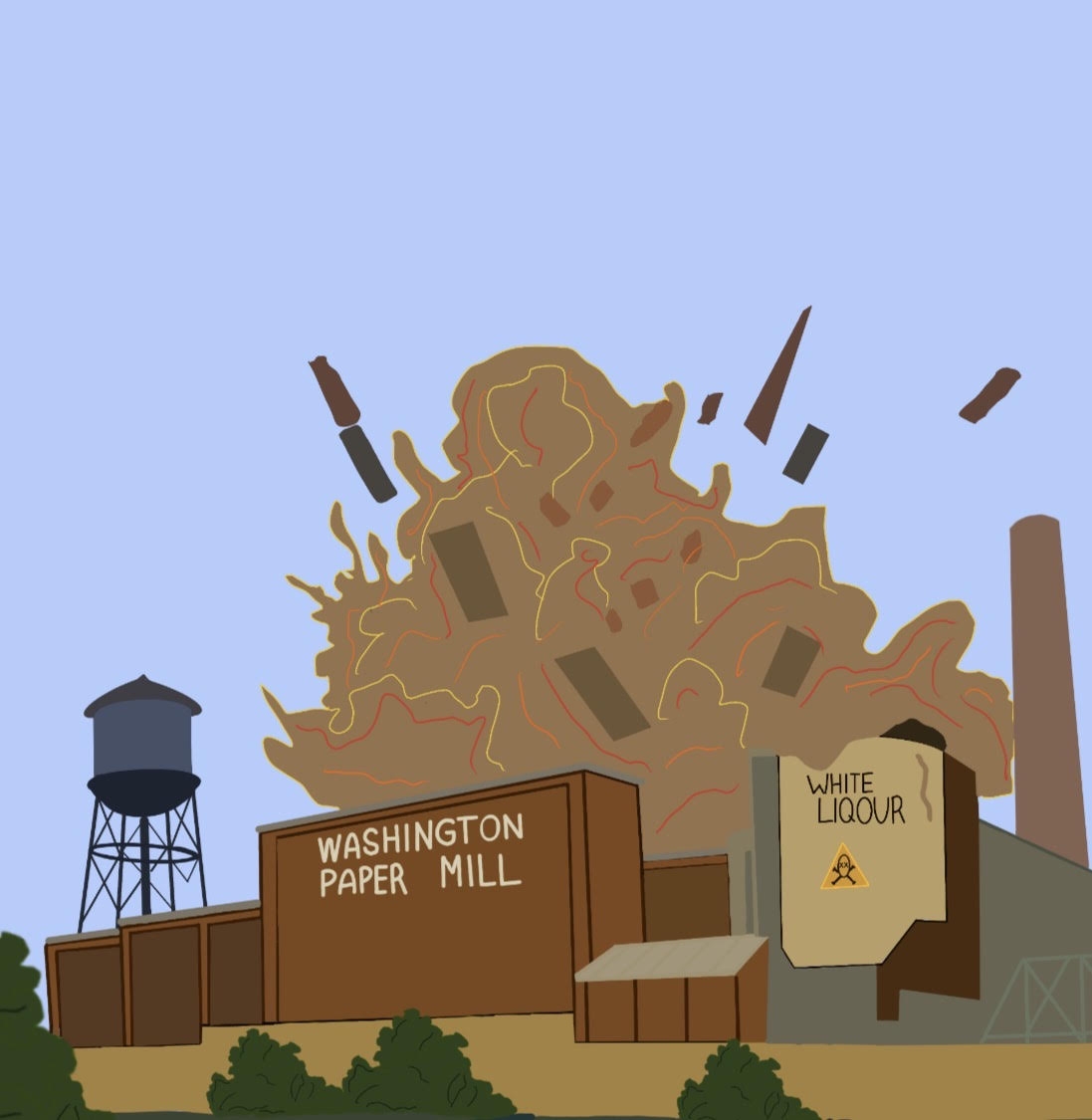
On May 26, 2026, a large, chemical paper mill tank ruptured in Longview, Wash, killing 11 confirmed individuals. The mill imploded and collapsed while morning and afternoon employees were changing shifts. The tank, full of over 600,000 gallons of chemicals, was highly corrosive and caustic. This accident is one of the deadliest workplace incidents that Washington state has experienced in years.
Nippon Dynawave Packaging Company produces $8 billion worth of paperboard and dehydrated wood annually and. the company has been open since 1953, relying on the chemicals to back up their production.
The chemical, known as “white liquor,” began spilling into the Columbia River, where it continues to leak the hazardous substance. To ensure that no one else gets hurt, the search for any other workers will be delayed until the chemical stops leaking. So far, the bodies that were recovered were found in the employee breakroom, where workers were at the time of the accident.
Eleven of the workers were already pronounced dead and another seven, along with one firefighter, were severely injured. The incident continues to cause disaster around the city of Longview, Wash. as authorities are still flushing the chemical out from the nearby rivers. The workers who died include Gilbert Bernal, Tyler Covington, Brad Covington, Robert Wilson, Dale Miller, Jared Ammons, Braydin Finkas, Clkinton Doran, John Forsberg, Norman Barlow and Dillon Miller.
“We’re bracing ourselves for this being the deadliest industrial tragedy in modern Washington state history,” Washington Governor, Bob Ferguson said.
Although the chemicals spilled into the river, they did not fully mix with the water, so it will not create long-lasting destruction. However, authorities still warn people to stay away from ditches and other areas close to the site in case it ruptures again.
The Department of Ecology and the Environmental Protection Agency have been tracking the air and water to ensure that it does not become contaminated. Authorities continue to drain the exposed water from drains and rivers to ensure that it does not become deadly to drink from.