
In the past month, America has been divided by the death of prominent conservative commentator, Charlie Kirk. Kirk, who was a very polarizing figure in his lifetime, has only grown more conflicted in the public consciousness since his death. Many of Kirk’s detractors have gone as far as to celebrate his death, leading to heated debate on social media over the ethics of glorifying someone’s death. Across the country, individuals have been fired for posts regarding Kirk’s death, with public school teachers among those impacted. Dozens of educators have been suspended or terminated for social media posts, sparking the discussion about the balance between free speech rights and professional responsibility.
Late night talk host, Jimmy Kimmel, was temporarily removed from the air after a joke about Kirk’s assassin drew backlash. Though he later returned, the incident highlighted how rapidly public opinion can lead to professional consequences. While Kimmel’s suspension was one of the most high profile examples of this phenomenon, teachers around the country are facing similar consequences for expressing their political beliefs outside of school. For educators, the stakes are arguably higher because their roles involve public trust and direct influences on students. Furthermore, unlike Kimmel, if a teacher is fired and reinstated, they lose valuable time to teach their students the long curriculum, putting them behind. This puts even more pressure on administrators to make the right choices the first time.
The controversy has placed much more attention on the role of politics in education. Civics and government are parts of the curriculum for many; therefore, teachers are then tasked with helping students understand the function of democracy. Common core standards identify critical thinking as a necessary skill for high school students, so it is important for young people to engage with political issues in school. When done in an unbiased and open minded way, political conversations in schools can help students by teaching them how to peacefully debate and allowing them to talk in depth about issues affecting their lives. School is meant to prepare children for adult life and a major aspect of that life is being politically literate, meaning it is important for school to instill these teachings.
However, educators are expected to allow for critical thinking rather than advocate for a particular political side. The goal should not be to persuade students but to provide them with the knowledge to form individual opinions. At the same time, teachers, like all citizens, hold personal beliefs. While they are required to maintain neutrality in the classroom, many argue they should be able to express those views outside of school, citing the first amendment which allows for freedom of speech and expression.
In Peabody, MA, this tension reached a breaking point. Two local teachers were terminated after posting on social media about Kirk, with critics describing the comments as political and insensitive. The loss of employment raised many responses through the community, with some applauding the decision and others insisting the teachers constitutional rights had been violated. Since the initial events, one of the fired teachers has resigned. The other was ultimately reinstated to their role on Sept. 30, allowing them to resume teaching the day after.
The speed at which the teacher was both put on leave and reinstated demonstrates how controversial of an issue the topic is. The case illustrates how quickly educators’ personal free speech can generate controversy and how administrators often feel the pressure to respond. It also opens the broad uncertainty about where professional obligations end and private freedoms begin. Furthermore, these layoffs put extra pressure on staff uncertain of whether or not they can say things in or out of the classroom, leading to them having to focus on their image instead of teaching their students. In recent years, many states, especially in the south, have introduced scripted lessons in order to ensure that teachers are informing their students of the right materials. Although this may seem to be a solution to the issue, it is not. Scripted lessons keep teachers from being able to add their own style to the classroom while also ensuring that students are not introduced to different opinions. On top of this, memorizing scripts will take away from time teachers could spend on helping their students.
The Peabody case is not an unique incident. Across the United States, teachers in multiple states have been suspended or dismissed over posts related to Kirk’s death. In Massachusetts alone teachers in Framingham, Wachusett and Malden lost their jobs on top of those in Peabody. Some educators criticized Kirk’s political beliefs, while others were accused of celebrating his death. In some cases, educators who did not have their positions restored took the issue to the judicial system, suing their former employers. One major example was at the University of South Dakota in which professor Michael Hook was reinstated to his role after bringing his case to the federal court who claimed that the University was violating his first amendment rights. Many educators across the country are now trying to find the same outcome as Hook.
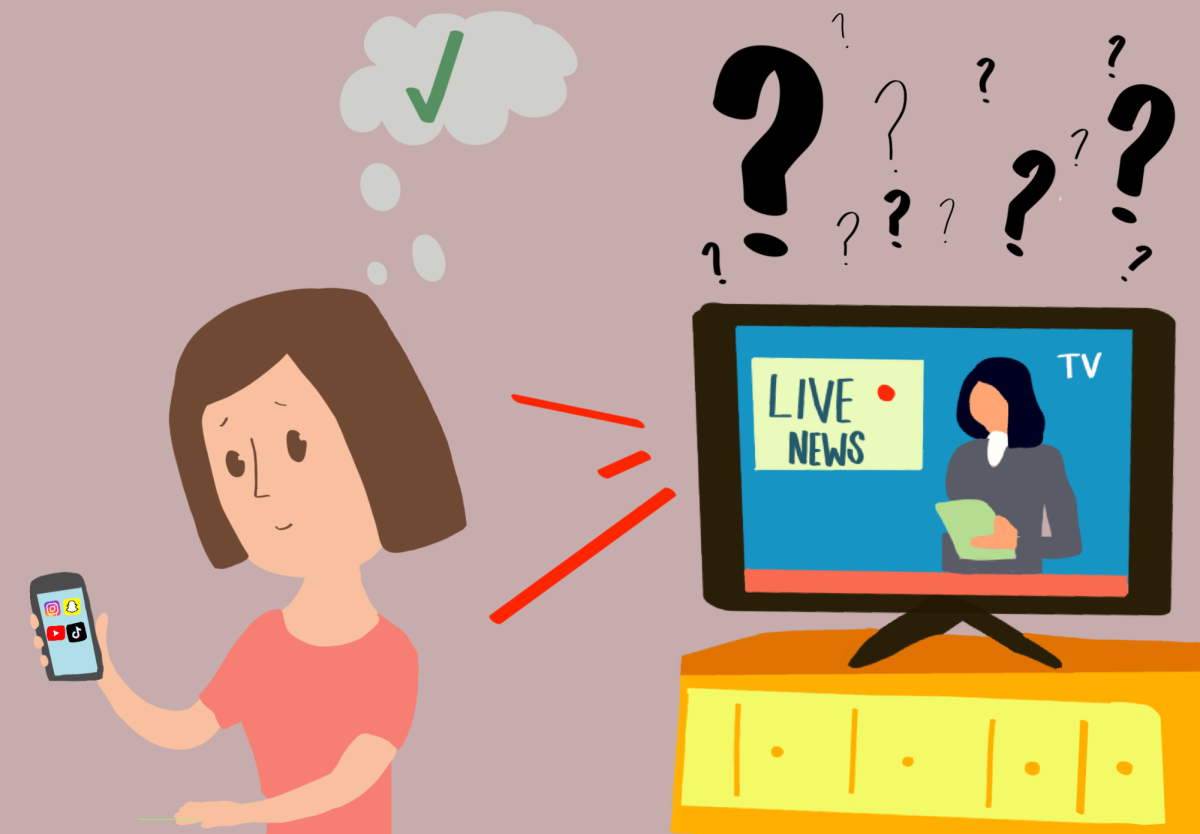
These events have reiterated the great role social media plays in shaping professional consequences. A single Facebook post or tweet can reach thousands, attract media coverage and spark community outrage. For teachers, the result is a constant balance between their rights as a private citizen and their responsibilities as public educators.
Teachers are going through an unprecedented experience. In no generation has it been this easy for one’s words to be shared to millions with little to no context. Teachers have no way to know what the right thing to do is in these situations because this has never happened before and by extent, administrators also do not know how to respond.
The Massachusetts Teachers Association (MTA), the state’s largest teachers union, has advised schools not to discipline educators for lawful speech outside of work. The MTA has emphasized that teachers do not need to give up their free speech rights simply by working in public schools.
At the same time, the union acknowledges the importance of neutrality in the classroom. Teachers cannot use their position to promote and violate the separation of church and state. The union’s position is that professional educators inside and classroom and personal expression outside it should be treated separately.
Social dynamics play an equally important role. Parents, community members and online audiences frequently demand responses from schools when controversial posts surface, and in some instances, community members are the ones who have reported teachers’ private posts to administrators. While holding individuals to certain moral standards is important in order to instill accountability and positive progress, the issue is that cancel culture has led to people assuming someone’s guilt before they receive due process, dissolving their right to be innocent until proven guilty.
At the core of the debate is the question of balance. Teachers, like all Americans, should be free to voice their opinions outside of work. Yet schools have an obligation to ensure classrooms remain inclusive and politically neutral. Navigating these balances requires clear policies, strong union and thoughtful leadership from administration.
Kirk’s death has made America into an even more politically polarized country. In order to reconcile the rift in the nation, it is imperative that teachers educate their students to be open to other ideas, meaning they need their free speech to be protected without them being allowed to present opinions as facts. While educators must not promote ideology in their teaching, displenting them for lawful personal speech risks violating democratic values. Protecting teachers rights while preserving classroom neutrality is essential to maintain both free expression and public trust. In a moment defined by division and public pressure, measuring the balance may be one of the most important tasks for education and democracy itself.